Creating a gallery wall is an excellent way to display art, photos, and other decorative items in a cohesive and visually stunning manner. However, selecting the right layout is critical to ensure the wall doesn’t feel cluttered or disjointed. This guide will walk you through choosing the right layout design for a gallery wall, the pros and cons of different layouts, and offer practical tips to help you plan the perfect display.
Why Layout Design for a Gallery Wall Matters
The layout of a gallery wall plays a major role in how the pieces interact with one another and how the overall design fits within the room. A well-planned layout will enhance the aesthetics of your space, making your gallery wall feel like an intentional and thoughtful part of your home decor. On the other hand, a poorly planned layout can lead to a disorganized or overwhelming appearance.
Key Factors to Consider in Layout Planning for a Gallery Wall:
- Space and scale: Consider the dimensions of your wall and the size of the pieces you want to display.
- Number of pieces: A gallery wall can range from a small collection of three or four items to a more elaborate arrangement with 10 or more.
- Style of the room: The overall design of the room should inform the layout choice. Is the space formal, modern, or eclectic? Your gallery wall should complement this.
- Personal taste: Your layout should also reflect your style—whether you prefer structured arrangements or something more free-flowing.
Now, let’s dive into some common gallery wall layouts, their pros and cons, and how to best use them.
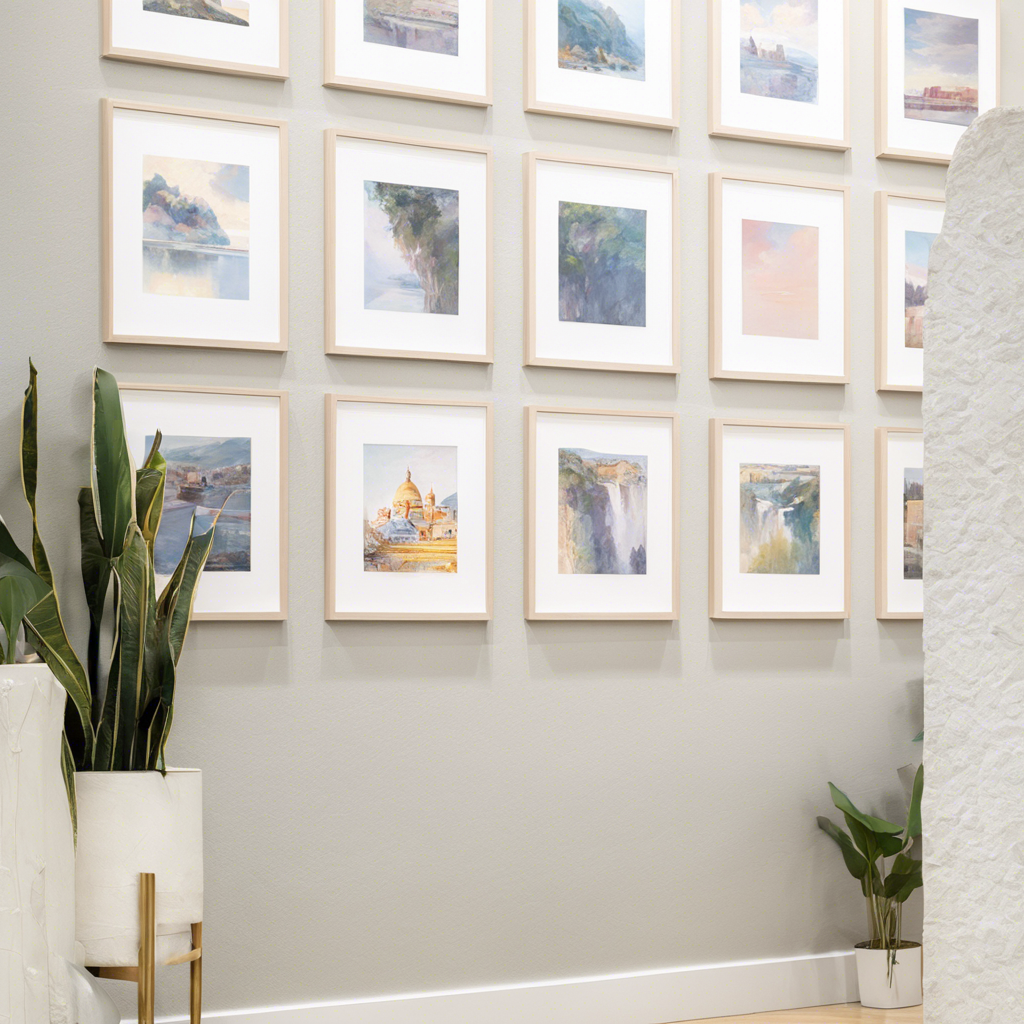
1. The Grid Layout Gallery Wall: Structured and Timeless
The grid layout is a highly organized option where all frames are arranged in neat rows and columns, with uniform spacing between each piece. This creates a symmetrical and clean appearance, ideal for those who enjoy structure and order.
Pros:
- Uniformity: This layout provides a cohesive, balanced look, especially when using frames of the same size and style.
- Easy to plan: Once you determine the size of your pieces and the spacing, the layout is straightforward to execute.
- Works well with matching artwork: Perfect for displaying a series of photographs, prints, or artwork that share a common theme or style.
Cons:
- Less flexibility: The rigid structure limits creativity. You must adhere to the grid, leaving little room for experimentation.
- Space limitations: A grid layout requires ample space, especially if you have larger pieces, so it may not suit smaller walls.
Practical Tips:
- Use a level and measuring tape to ensure straight lines and even spacing.
- Stick to uniform frame sizes for a sleek and modern look.
- Ideal for minimalist or contemporary spaces where order is a priority.
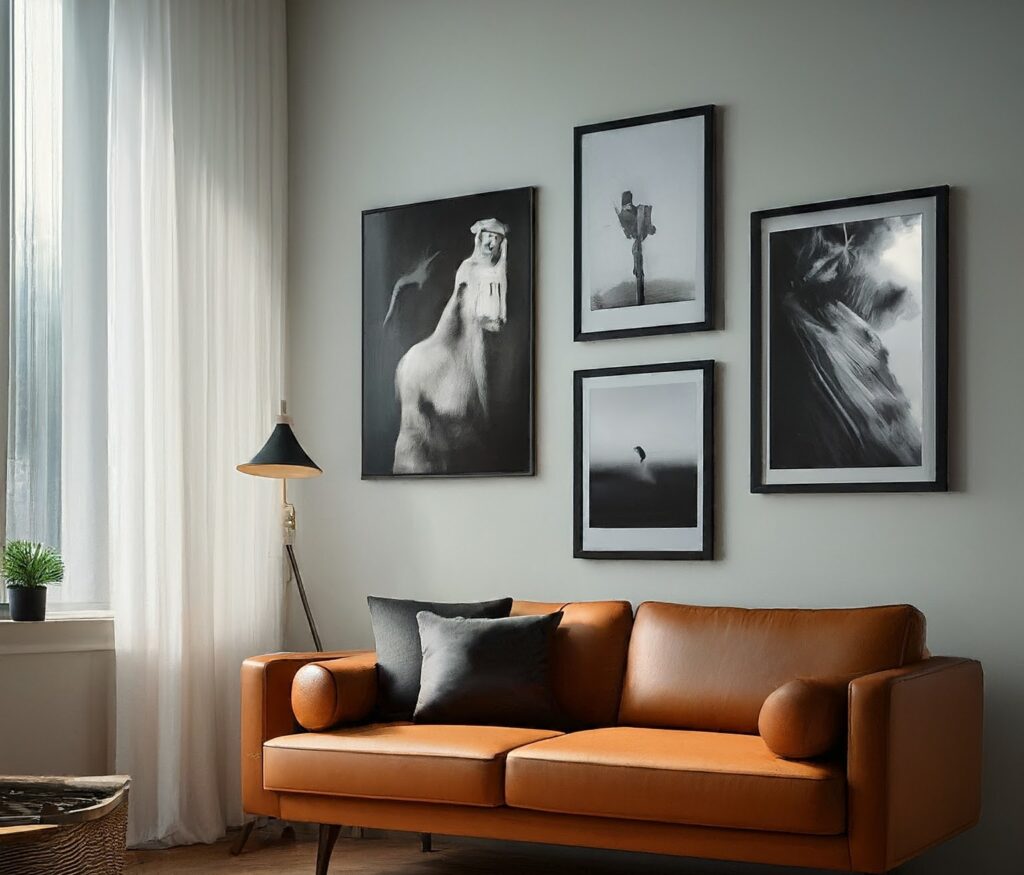
2. The Asymmetrical Gallery Wall: Dynamic and Creative
An asymmetrical gallery wall allows for a more free-form arrangement where pieces vary in size and spacing. This layout can feel playful, creative, and spontaneous, perfect for eclectic or artistic spaces.
Pros:
- Creative flexibility: You can mix different sizes and shapes, allowing for a more personalized and interesting layout.
- Works in various spaces: This layout can be adapted to fit any space, making it suitable for both large and small walls.
- Visually engaging: The variety of sizes and shapes adds depth and dimension, making the wall more dynamic.
Cons:
- Challenging to balance: Achieving visual balance without symmetry can be tricky. If not done well, the wall can look chaotic.
- Harder to plan: Without a structured guide, you may need more time and effort to plan the layout.
Practical Tips:
- Start by placing your largest pieces first and work outward with smaller ones.
- Keep consistent spacing between the pieces to avoid clutter.
- Test your layout by laying the pieces on the floor before hanging them on the wall.
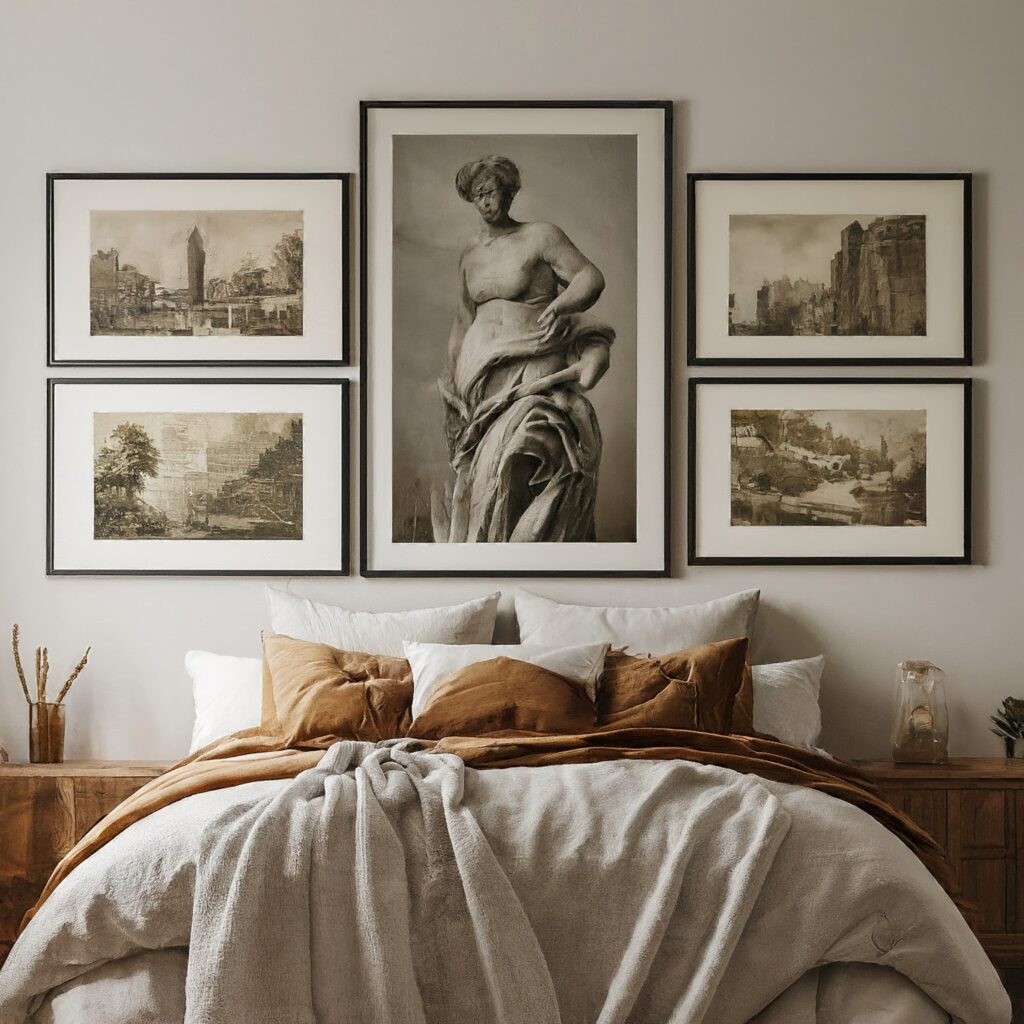
3. The Symmetrical Gallery Wall: Classic and Balanced
A symmetrical gallery wall centers around a focal point and mirrors the placement of art on either side. It is a great option for achieving a formal and elegant appearance, often found in more traditional settings.
Pros:
- Visually balanced: This layout offers a sense of calm and stability, perfect for formal living rooms or dining areas.
- Structured yet flexible: While the layout is symmetrical, you have some flexibility in choosing the sizes of the pieces as long as they mirror each other.
- Works with larger pieces: Symmetrical layouts lend themselves well to larger pieces of art or photographs, particularly those that command attention.
Cons:
- Requires precision: Like the grid layout, symmetry demands careful measuring and alignment.
- May feel predictable: For those who prefer a more creative or eclectic feel, this layout may come across as too formal or rigid.
Practical Tips:
- Select a large central piece to anchor the display, then add smaller, matching pieces on either side.
- Use pieces of similar size and shape to enhance the symmetrical effect.
- Perfect for formal spaces or rooms with classic design elements.

4. The Thematic Gallery Wall: Curated and Personalized
A thematic gallery wall focuses on displaying pieces that share a common theme, such as travel photography, abstract art, or botanical prints. The layout can be either structured or free-form, depending on your personal preference, but the unifying theme is what ties the collection together.
Pros:
- Cohesive and intentional: The thematic approach creates a sense of unity, making the display feel well-curated and thoughtful.
- Allows for personal expression: Themes provide an opportunity to showcase your personality and interests.
- Flexible layout options: You can choose from any of the other layouts (grid, asymmetrical, or symmetrical) while keeping the theme consistent.
Cons:
- Can feel limiting: Choosing a theme may limit your flexibility in terms of the types of art or objects you can include.
- May require frequent updates: If your tastes change or the theme feels outdated, you might find yourself redoing the entire wall.
Practical Tips:
- Stick to a color palette or subject matter to maintain cohesion.
- Mix different mediums within the theme, such as combining photographs with paintings or 3D objects.
- Plan your layout to highlight the theme’s focal points for maximum impact.
Conclusion: Finding the Best Layout for Your Gallery Wall
Choosing the right layout when creating a gallery wall can transform your space, making it feel more personal, stylish, and cohesive. Whether you prefer the structure of a grid layout gallery wall, the freedom of an asymmetrical gallery wall, the balance of a symmetrical gallery wall, or the narrative of a thematic gallery wall, each option offers its own unique benefits.
To create the best gallery wall layout:
- Consider the size of your wall and the pieces you want to display.
- Think about how the layout will interact with the room’s existing decor.
- Don’t be afraid to experiment with different arrangements before making a final decision.
With careful planning and attention to detail, your gallery wall can become a stunning focal point that reflects your style and creativity.